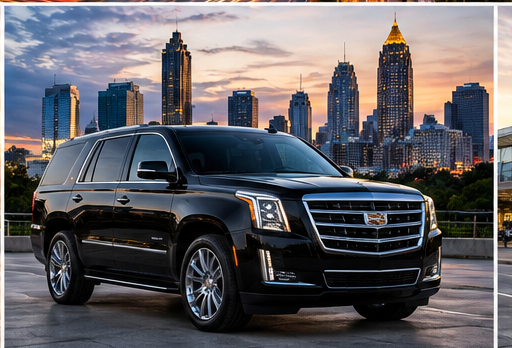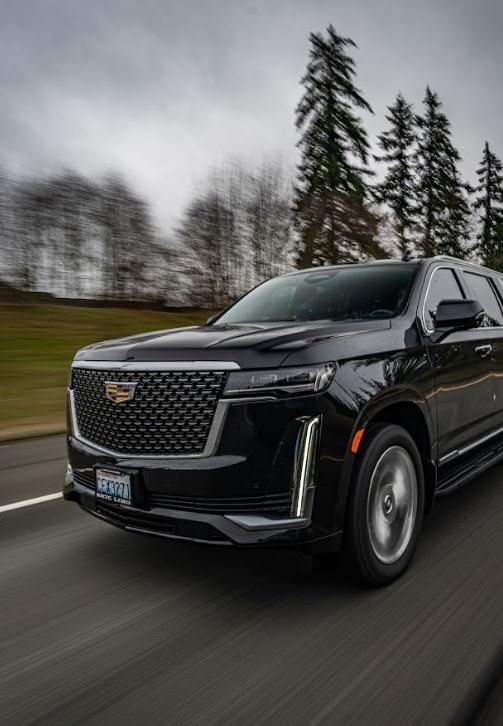

Illustrative photograph. You book a vehicle class, not a specific make or model.
Choose an executive sedan for one to three passengers with normal luggage, and an executive SUV for four to six passengers, bulky or oversized items, or a long as-directed day. A sedan carries up to 3 passengers and 3 suitcases; a Suburban- or Yukon-class SUV carries up to 6 passengers and 6 suitcases. When you are close to the limit, or carrying golf bags, ski gear or sample cases, book the SUV.
Capacity at a glance
| Situation | Executive Sedan (3 passengers / 3 bags) | Executive SUV (6 passengers / 6 bags) |
|---|---|---|
| Solo traveler, carry-on or one suitcase | Best fit | More than you need |
| Two or three travelers, one bag each | Good fit | Roomier; worth it for a long ride |
| Four to six travelers | Does not fit | Best fit |
| Golf bags, ski or snowboard gear | Limited; ask before booking | Best fit |
| Sample cases, displays, AV equipment | Only if small | Best fit |
| Snow, ice or heavy rain | Fine on cleared roads | Higher clearance; ask about four-wheel drive |
| Full as-directed day with several stops | Fine for one or two people | Better for a team working between stops |
| Understated arrival | Best fit | More visible presence |
| Lowest cost for a small party | Best fit | Typically priced higher |
Passengers: count everyone, including the adults in the back
An executive sedan seats three passengers comfortably: one in front and two in the back, or three in the back for a short trip. Three adults across the rear bench is workable for a quick transfer but tight for an hour-long drive, so for a group of three on a longer ride, consider putting one person up front or moving to an SUV.
A Suburban- or Yukon-class SUV seats six passengers across its second and third rows. It is the obvious choice for four or more people, and it also lets a group of three spread out, work, or take calls without sitting shoulder to shoulder.
Luggage: the number that usually decides it
Rated capacity assumes standard suitcases. Real trips rarely look like that.
- Golf bags are long and rigid. A sedan trunk may take one or two, depending on the bag and the trunk, but not alongside full-size suitcases. A golf group almost always needs an SUV.
- Ski and snowboard gear is long and awkward. Plan on an SUV, and tell the booking desk so the chauffeur can arrange the cargo area in advance.
- Sample cases, trade-show displays and AV kits are heavy, boxy and often fragile. They fit an SUV cargo area far more easily than a sedan trunk.
- Strollers, car seats and wheelchairs take significant space. Mention them when you book.
Two practical rules: the maximums are not both achievable with oversized items (six passengers plus six ski bags will not fit), and if you are unsure, book the larger vehicle. Being one bag over in a sedan means either a second car or a very uncomfortable ride.
Comfort on longer trips
For a 20-minute airport transfer, either vehicle is comfortable within its capacity. For a long drive between cities or a full day of meetings, the extra headroom, legroom and space to spread out a laptop in an SUV matter more with each stop. For a single executive on a long day, a sedan often remains the quieter, more private choice.
Weather
In rain and on cleared winter roads, a well-maintained sedan in the hands of a professional chauffeur is perfectly capable. For mountain routes, snow-heavy destinations or unplowed roads, an SUV’s higher ground clearance helps, and full-size SUVs in this class are commonly available with four-wheel drive. If that matters for your trip, ask for it when you book rather than assuming.
Image and the impression you want to make
A sedan reads as understated and discreet: a good choice for a confidential meeting, a media-sensitive trip or a principal who prefers a low profile. A black SUV reads as substantial and is often preferred for VIP pickups, roadshows and client arrivals where a group should arrive together in one vehicle.
The cost difference
An SUV typically costs more than a sedan for the same trip, because it is a larger vehicle that costs more to run. The comparison that matters is total cost for the group. Four travelers in two sedans usually cost more than one SUV, and they arrive separately. One traveler in an SUV pays for space they will not use. The simplest way to compare is to price both: our instant quote shows the all-inclusive price for each vehicle class, including gratuity and known airport fees.
A quick decision checklist
- Count passengers. Four or more means an SUV.
- Count bags, and flag anything oversized. Golf, ski, sample or equipment cases point to an SUV.
- Check the length of the day. Several hours with a team favors an SUV.
- Check the weather and route. Snow or mountain roads favor an SUV; ask about four-wheel drive.
- Decide on the impression. Understated favors a sedan; arriving together favors an SUV.
- Compare all-in prices for both, then choose.
Executive Black Car offers both vehicle classes in all 27 cities in our black car service directory, driven by vetted independent local chauffeur operators. For recurring travel, a corporate account lets your team book either class and receive one monthly invoice.
Quick answers
How many passengers and bags fit in an executive sedan?
Up to 3 passengers and 3 standard suitcases. Three adults across the rear seat is fine for a short trip but tight for a long one.
How many passengers and bags fit in an executive SUV?
A Suburban- or Yukon-class executive SUV carries up to 6 passengers and 6 standard suitcases. Oversized items such as golf bags or skis reduce how much fits when the vehicle is full.
Will golf bags fit in a sedan?
Sometimes one or two, depending on the bag and the trunk, but rarely with full-size suitcases as well. For a golf group, book an SUV.
Is an SUV worth the extra cost?
For four or more passengers, bulky luggage, winter conditions or a long day with a team, usually yes; it is often cheaper than two sedans. For one or two travelers with normal luggage, a sedan is the better value.